How it all started…..
I qualified as a Dispensing Optician in July 1992. I have spent my career in the Independent sector and I intend to remain working in that sector, as I am very passionate about offering the very best customer service and recommending the best quality products too. Following my FBDO qualification, I rattled through numerous courses, namely the Spectacle Lens Design, so I added (Hons)SLD to my title. I then became interested in management and marketing, and attended every breakfast briefing meeting to gain more experience and knowledge. Many years later, in the years 2000-2003, I was one of the first cohort of students, to undertake the BSc (Hons) degree in Business Administration for dispensing opticians at Brunel University. My claim to fame is that the current ABDO president, Fiona Anderson, was also one of my fellow cohorts!
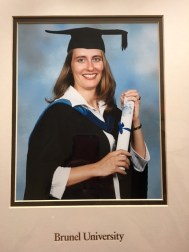
And so it was my passion for marketing and for the survival of the Independent sector that led to my dissertation entitled ‘Evolve or Dissolve’
Is there a future for the Small Independent Optical Business?
This was a study based on the future of the Independent Optical Business and how it can survive and succeed in an increasingly competitive marketplace. It recommended strategies for the small optical business to implement to achieve a competitive advantage and hence to ‘evolve’.
Although, this piece of research is 13 years old, it still remains a focal point in the optical world, and there are lots of companies that have appeared recently singing from the same hymn sheet, so as I read through the ideas that I tried and tested during my manager and marketing roles and for my dissertation. I was delighted to have been ahead of the game all those years ago.
I feel that my conclusions are worth sharing as my first blog, as there are still numerous Independents that may gain some inspiration from my work.
My research addressed the optical market and discovered that although the market was mature, the areas of growth were product innovation and disposable contact lenses. The ageing population and a high demand for eye examinations was good news. It was reassuring to note that 60% of consumers required a sight correction. From the research conducted by Mintel back in 2002 and my own customer research the customer was more demanding of a high quality eye examination. They also preferred the friendly and personal service of a small, opticians rather than the ‘multiples.’ The ‘special offers’ at the multiples attracted a certain type of customer and most customers’ associated low price with poor quality. The small optical practice has to consider keeping up-to-date with technology and stocking more unique products and this can be carried out using local market knowledge to see whom the business is attracting. Customers are very loyal if they have been satisfied with the overall service. The customer expects highly knowledgeable staff and this is an area the research highlighted. Overall, from the customer research it highlighted that it is important for the optical practice to defend their patient base. This means strengthening customer loyalty, which in turn requires an understanding of consumer needs and an ability to communicate effectively and frequently with the database. Only then will patients be more likely to make appointments and purchase quality products at the practice.
For the research study, I also conducted interviews with business owners. There was some evidence to suggest that the more ‘entrepreneurial’ owners had started to implement the necessary requirements for success, but the majority needed to consider some form of planning. They have to ‘evolve’ themselves and become more managerial as the organisation grows and becomes more formalized.
To achieve success the entrepreneur must conduct some strategic planning through a process of analysis, implementation and control to ensure ongoing improvements.
The future for the small optical business is to follow market penetration and differentiation strategies. It is important to sell more to the existing customers of the business. It costs less to do this. The owner research shows it is easy to ‘plod’ along with the same products and services but for the entrepreneur, it is vital to take an ‘innovative’ approach particularly in the competitive optical market.
The main functions of the business that I highlighted were Organization Design, Marketing, Human Resource Management, Strategy and Finance and the Management style of the Leader; if these are linked together in a strategic plan with attention to cash-flow forecasts, the effective use of time, a good level of risk-taking and decision-making and confidence in this vision, it can deliver a personalised, flexible tailor-made service to ensure the business exceeds customer expectations.
In order for the independent practice to survive it needs:
- An ‘entrepreneurial’ leader
- Mission statement e.g. “delight the customer/client”
- The appropriate culture and structure
- Create and sustain an effective management team
- Strategic decisions: Compete on quality never price. Differentiate by product and service innovation, building trust and the reputation of the business.
- Attract, Train and Retain the best retail and professional employees
- Sound financial, quality and performance controls
A good strategy is one by which a small optical business, through management of its internal resources, can build and sustain distinctive skills and abilities.
 My optical dispensing digest